Sunday, June 10, 2012

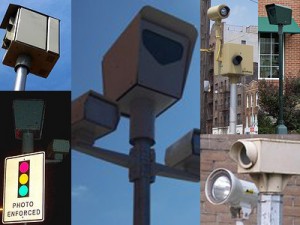
Red-light cameras return to use in N.J.

The red-light cameras are back in action.

The New Jersey Department of Transportation on Wednesday told 21 towns they could resume issuing tickets based on information from red-light cameras at 65 intersections.


Tickets also can be issued for violations recorded since June 19, when the red-light camera program was suspended in those towns, the department said. The cameras were operating during the last month, but towns had not been permitted to issue tickets while lights and cameras were inspected.

Cameras at intersections in Cherry Hill, Glassboro, Stratford, Monroe, and 17 other New Jersey communities have been tested and found to be properly calibrated, the department said.
"Drivers are now on notice: If you go through a red light, or you fail to come to a complete stop before making a right turn on red, you will be ticketed," Cherry Hill Mayor Chuck Cahn said Wednesday.

Cherry Hill has a backlog of 3,276 red-light violations awaiting review by police officers, deputy solicitor Erin Gill said.

If officers determine the violations, recorded by cameras at Springdale Road and Route 70, are valid, "those motorists will receive tickets," Gill said.

"As Gov. Christie said last night, 'If you don't go through red lights, you have nothing to worry about,' " Cahn said. " 'It's when you go through the intersection when it's red that you have two problems. The first for sure is you're going to get a ticket. The potential is that you could kill yourself or somebody else.' "

The 21 towns were ordered last month to analyze their lights, cameras, and traffic speeds by Aug. 1 to certify that the yellow phase was long enough to meet the standards of the red-light camera pilot program.

The program requires the yellow phase of the light to be at least one second long for every 10 m.p.h. of the prevailing speed of approaching vehicles.

So, if at least 85 percent of cars are going 45 m.p.h., the yellow must be 4.5 seconds long.

After engineers' inspections, "in each case, the results have confirmed that the duration of a yellow light at the authorized intersection meets the minimum duration as required by the legislation," NJDot said Wednesday.

Red-light cameras have been controversial - and lucrative - since New Jersey started the pilot program in 2009 to test their effectiveness in reducing crashes and injuries in 25 municipalities.

http://articles.philly.com/2012-07-27/news/32870379_1_red-light-cameras-cameras-at-nine-intersections-intersections-in-six-municipalities

Saturday, June 9, 2012

Samsung Digital Camera Suggestions

When you are looking for Samsung digital camera suggestions, you should look at the Samsung NV3, which is a compact digital camera with very few bad reviews. It seems that this camera has stood up to the challenge of being considered the perfect camera. The price is ideal for under two hundred dollars. The camera has had a one complaint about the battery life, but that could be corrected with rechargeable batteries, which last longer than the regular AA alkaline batteries. This camera has 7.2 megapixels with five times digital zoom and three times optical zoom. The two and a half inch viewing screen is ideal.


The Samsung digital camera suggestions include the GX-10 with 10.2 megapixels and the S1050 with 10.1 megapixels. The bodies are a bit larger than most compact cameras, but the picture quality is perfect. The other digital camera is the camera for under one hundred dollars. The S630 has a two and a half inch viewing screen with five times digital zoom and three times optical zoom. The 6.0 megapixels is a little low, but the picture quality is still good. This camera is very thin and compact for easy traveling.

Just a few more Samsung digital camera suggestions are the super thin Samsung NV15 with 10.1 megapixels and the Samsung i85 with 8.2 megapixels. Samsung has many different cameras with different resolutions to choose. Depending on your needs, you can find a great camera with few problems with picture quality. The majority of the Samsung digital cameras use the SDHC memory cards.

If you are looking for a SLR camera, the Samsung GX-1L is a nice camera as well as the Digimax GX-1L digital camera. You will find that Samsung has a camera for beginners as well as professionals. The cameras do give quality pictures and a true compact solution.

http://ezinearticles.com/?Samsung-Digital-Camera-Suggestions

Friday, June 8, 2012

Red Light Camera Locations - Get Them on GPS

Every day, more American Motorists are being attacked by so called 'red light cameras'. These 'robotic traffic cops' are going up all over the country in the name of 'security'. But in reality, they serve a classic political agenda: to increase revenue. And we're growing very tired of it.


Red light cameras currently have many problems. These include activating too soon after a red light appears, taking pictures of the wrong car, taking pictures of the right car with the wrong driver - and sending them a ticket anyway, and miscalculating speed. These problems only become exasperated during high traffic - a time when they are supposed to be 'most effective'.

Then there is the fact that these electronic monitoring devices represent a startling loss of freedom. The most obvious of which is our privacy. Although some would argue as to your right for privacy, the fact is it has been a fundamental human freedom throughout history. Without privacy, abusive powers can act against you with almost no means for retaliation. Devices like these red light cameras, speed cameras, and others are a total violation of personal privacy. And the very idea of them causes further subordination in our population to abusive government power.

How to See Red Light Cameras on Your GPS Navigation!

While this problem results from the misuse of technology, it also offers the solution. Using almost any popular automotive GPS unit, you can see ahead of time nearly every red light camera, speed trap camera, and other electronic traffic intervention devices. By downloading a regularly updated map, you will be alerted in advance as you approach red light cameras, speed traps, and more. Then not only can you beat unfair speeding tickets, but you gain a 'true' sense of safety by knowing what lies ahead. Not the false kind which comes at the cost of your freedom..

He who would trade liberty for some temporary security deserves neither and will lose both.


http://ezinearticles.com/?Red-Light-Camera-Locations---Get-Them-on-GPS

Thursday, June 7, 2012

Red Light Camera Applications: Do They Really Work?

Are you trying to avoid a speeding ticket? Guess what: now there's an app for you. Believe it or not, cutting edge mobile phone technology is now helping drivers like you avoid getting tickets from red light cameras and speed cameras.

Whether or not you believe that red light cameras actually do make roads safer or whether you think they're just an unfair money grabber, you probably do not want to be the one who gets a ticket!


Now, you can keep track of the locations of speed cameras in your town and city. You can be alerted to their presence in time to slow down and avoid a hefty fine. This is good news, isn't it?

The way the technology works is that satellites are accessed by your GPS or smartphone to alert you to red light cameras, mobile speed traps, and police checkpoints.

How Smart Is Your Smart Phone?

One popular app is the Phantom Alert app. Drivers say this is extremely successful and has helped them avoid fines and tickets. In one real-life test, a driver reports that as she was coming up to a red light camera, the Phantom Alert app warned her to reduce her speed. This is exactly the kind of help you need when you're driving along not paying attention.

In the same test, speed cameras were also successfully spotted and the driver was able to slow down in time. Wow!

Being Good Neighbors

Some of this kind of technology relies on drivers to enter information about the locations of red light cameras and speed traps on an ongoing basis. The more drivers share info, the better the apps will be. The more accurate the information will be and the more likely it is that you will avoid paying fines and save money. So think of yourself as a good neighbor to other drivers.

How Do Police Feel About Apps that Help You Avoid Speeding Cameras?

Of course it depends on who you talk to, but many police officers do not see a concern with drivers like you using smart phone technology to avoid tickets. It is not illegal. And the point is, someone using a speed camera detector is obviously going to slow down in dangerous areas, or stop for a red light where they might otherwise not have. This makes this roads safer for everyone. Most good cops do not want to give you a ticket; they want to keep you safe and help everyone follow traffic laws!

Just be sure you are not looking at your smartphone or GPS all the time and getting distracted. The point is to be less distracted not more! There are lots of different kinds of speed camera detectors so make sure you choose one that lets you keep your hands on the wheel and your eyes on the road.

http://ezinearticles.com/?Red-Light-Camera-Applications:-Do-They-Really-Work?

Wednesday, June 6, 2012

Avoiding Red Light Camera Traps

Did you know the red light camera traps set up to catch people running red lights are privatized?

That's right! Private security companies!

The cities who use these cameras profit a small percentage of the security companies revenue from the tickets you and I receive, with the bulk of the fine remaining with the security company!


If you have watched the news lately you would have seen cities like Baltimore being investigated for slowing down the yellow light in order to get people to run the red light, and collect a portion of the ticket that will be issued!

It's obvious that in these hard economic times, even big cities will find a way to stick it to us when we least expect it.

In order to combat these unfair practices, some companies have developed license plate photo blocker sprays.

The spray acts like the multi colored cars you see on the road today. When they are coming at you, they are one color, as they pass they become many colors.

This is due to the molecular make up of the paint.

Photo blocker sprays work in much the same manner. When a camera tries to take a picture from an angle above your vehicle, all it see's is a white flash!

There's even more good news for people who don't like sprays but want to avoid red light camera traps.

Other companies have developed license plate covers that are clear, but again cannot be photographed from an angle because the molecular structure of the plastic cover is altered in much the same way as the sprays are.

And in related news, the fight for avoiding police speed traps has taken a turn for those states that have anti radar laws.

New downloads for your GPS systems allow the user to see police radar traps. Some up to 10 miles in advance.

And these are Legal in all states!

Garmin, Tom Tom, Magellian and many other GPS systems all have the interface already provided to accept the download.

Personally, I don't believe private security companies should profit from our misdemeanor traffic offenses.

I think this will lead to higher and higher ticket fines and when the government see's their profit share, they will probably privatize speeding tickets too.

Imagine being pulled over by a fat guy wearing a beard, driving a Toyota, walking up to your car with his shirt untucked...handing you a ticket for traveling 1 mile over the speed limit!

Join the fight to prevent privatization of police issues in your state.

Vote against any politician who see's red light camera traps as a good thing and write your congressman to voice your opposition.


http://ezinearticles.com/?Avoiding-Red-Light-Camera-Traps

Tuesday, June 5, 2012

Red Light Camera Ticket

What If You Can't Stop on Red

Do the Red Light Cameras that more and more cities are putting in service really reduce preventable collisions, or are they just a money magnet for the cities and for the companies that install them?

Do the cameras really keep the community safe, or is it just a receipt for disaster causing more rear end accidents?


Cities say that red light running is a dangerous and costly problem. They cite that most people run red lights because they are in a hurry, when in fact they only save seconds. And that the red light runner also puts his life and the safety of others at risk. These cites say their objective is to change driver's behaviors to keep the community and our kids safe by reducing preventable collisions at red light intersections.

Owners of vehicles photographed running red lights at intersections where cameras are installed will receive a Notice of Violation and will be subject to a fine of $75 and up to $350 depending on where you receive the ticket, the west coast seem to have the higher fines.

Red light cameras are going up all over the U.S., and hundreds of motorists are getting citations in the mail each month for running red lights, but something that enforcement is not saying is that a significant number minor accidents increase as people slam on their brakes. This is consistent around the country when cameras are installed.

One company, Redflex, is helping to dole out about 4,000 traffic citations per day, or just under 1.5 million per year. The company's cut per ticket varies by city, but in its hometown, Scottsdale, Redflex pockets about $40 from each $180 red-light fine on average. Redflex has 600 cameras in 87 cities in six states. Roughly 200 more will be installed this year. It has 60 cameras in Chicago. More than 40 percent of all traffic cameras installed in the U.S. are Redflex. Redflex had $26 million in revenue last year, has emerged as one of the fastest-growing companies within an industry whose growth potential it believes is staggering. The industry could some day become a $3 billion juggernaut, Redflex recently told analysts.

This is typical of the revenue being made by these companies, and we are the ones footing the bill. I believe that red light and speed enforcement needs to be addressed but in most cases it's a little fuzzy about what is safety and what is just plain a money making scheme. Some cities are going as far as to cut the red light timing by as much as a second to give more tickets, and the public is at risk in these types of situations due to increased rear end collisions.

My advise is with red light camera locations growing at 25% a year, don't take a chance. Make sure you stop at the lights, there is enough time to do so in most cases, but if it appears that stopping may cause an accident be prepared to get a ticket. If you do under these circumstances have all the facts to take with you to court.

I know from experience as I got one of those letters in the mail recently, along with the typical $100.00 ticket that I am fighting in court the end of November. In the photo ticket that I received it was a clear morning in September at 8:30 am and it looks like midnight with no lights on. You can barely see my vehicle in the photo and you can't see the red light to tell what color it even was, they did however have a clear photo of my license plate. you can see the actual ticket I received and a photo of my plate at my web site below along with some tips on tickets.

http://ezinearticles.com/?Red-Light-Camera-Ticket

Monday, June 4, 2012

Aerial Photography Using RC Helicopters

Over the last year the use of remote control helicopters for aerial photography applications has taken a massive leap forward into the mainstream. This is mainly due to more exposure in the press and thus more people knowing what is possible. The basic technology has actually been available for a while now, although recently it has become cheaper, more reliable and with a few new innovations, much safer.


So how can you go about getting your own aerial photography rig in the air? There are three main elements to consider:

* The helicopter airframe you wish to use.
* The camera gimbal, control and viewing system.
* Stabilisation and autopilot technology.

The best way to decide what remote controlled helicopter to use for your aerial photography project is to first decide what camera or camera weight you would like to use. If you decide to go for a budget option with a small point-and-shoot, then you can get away with a smaller helicopter to lift the weight. However if you want to go all out with DSLR aerial photography, then you will need a larger helicopter, at least a 600-class to lift the required weight. Stick with electric motors the benefits being less vibration and noise. The helicopter should be of a good build quality, being able to endure heavy lifting, and then modified to your requirements, the Align and Maxi Joker series are a popular choice.

Once you have a helicopter ready to go, make sure you can fly it comfortably. Then you can look at the best way to mount your camera system - in front or under slung. Both will work better in different situations, however I prefer a front mounted system, as this is easier to isolate from vibration, and allows a better angle for filming. The weight can easily be offset by mounting the batteries below the tail. Vibration isolation is very important; it is most certainly worth buying a more expensive mount that does a better job of this. Control can be achieved through a second radio system (and a second operator is recommended). Controlling pan, tilt, roll, shutter and many other functions is possible as well as video down links so you can see and frame you shots from the ground.

Flight stabilisation for remote controlled helicopters has moved forward very quickly recently, with great new innovations as well as military UAV technology making its way into the commercial market. I would recommend at least a basic system, as it will provide a much more stable platform to shoot from. If you are an experienced pilot, this will be enough. However if your budget can accommodate the outlay, there are autopilot systems capable of flying your aerial photography helicopter with no manual input via pre-programmed GPS waypoints. Safety is also a great benefit of these systems, from holding the helicopter stable if communication is lost, to returning it to its take-off point automatically with the more advanced systems.

A final word must be said about insurance and permission to conduct aerial work within the UK. So far as I know there is no equipment cover available for small unmanned aerial photography vehicles in the UK, there is however cover available for public liability and professional indemnity, both of which I recommend taking out. Finally the Civil Aviation Authority requires that any aerial work carried out in the UK has permission from them to do so. They are considered the leading body in this field and thus many other countries are following their approach.

http://ezinearticles.com/?Aerial-Photography-Using-RC-Helicopters

Iklan